If you own a golf course home in Trophy Club, you are not selling just square footage. You are selling a setting, a view, and a lifestyle that can stand apart in one of North Texas’ most recognized golf-centered communities. The challenge is that not every home near the course commands the same response from buyers, so your pricing, presentation, and marketing need to be precise. Here is how to position your home so buyers understand its full value. Let’s dive in.
Why Trophy Club golf homes stand out
Trophy Club was built around golf, and that identity still shapes buyer perception today. The town describes itself as Texas’s first master-planned community, with more than 1,000 acres of parks and 36 holes of golf woven through residential areas.
That matters when you sell. In a market where buyers can compare homes across several Trophy Club neighborhoods, a golf course location can be a true differentiator, but only when your listing clearly explains what your home gains from that relationship to the course.
Trophy Club market conditions matter
As of May 2026, Redfin reports a median sale price of $869,480 in Trophy Club and a median of 34 days on market. Realtor.com also points to a high-value market, reporting a median listing price of $847,000, a median sold price of $810,937, 71 active listings, and a median days-on-market figure of 35 days.
Those numbers send a clear message. Homes are moving in a reasonable timeframe and often near list price, but that does not mean every listing can rely on momentum alone. In this market, presentation and price discipline still matter.
Golf frontage is not all the same
One of the biggest mistakes sellers make is assuming that any home near the course should earn the same premium. Research suggests golf-course location can add value, but the premium varies widely by market and is strongest when a home directly abuts the course or enjoys a clear view.
A study cited in the research found a 7.6% sale-price lift for golf-course location, while another Texas study found adjacent lots in a golf-course subdivision sold for 25.8% more. The practical takeaway is simple: buyers pay more for specific benefits, not vague proximity.
What buyers want to see
Your listing should identify the exact value of the golf setting. That may include:
- Direct fairway views
- Green views
- Rear-yard privacy
- Open-space feel behind the home
- Greater visual distance from rear neighbors
- A strong indoor-outdoor connection
If your home is simply in a golf-oriented neighborhood but does not directly benefit from those features, your marketing should stay accurate and specific. Buyers in Trophy Club are comparing options closely, including golf-linked enclaves such as Fairway Village, The Villas of Hogan’s Glen, Waters Edge at Hogan’s Glen, and Hogans Glen Estates, along with other community options.
Show the back of the home first
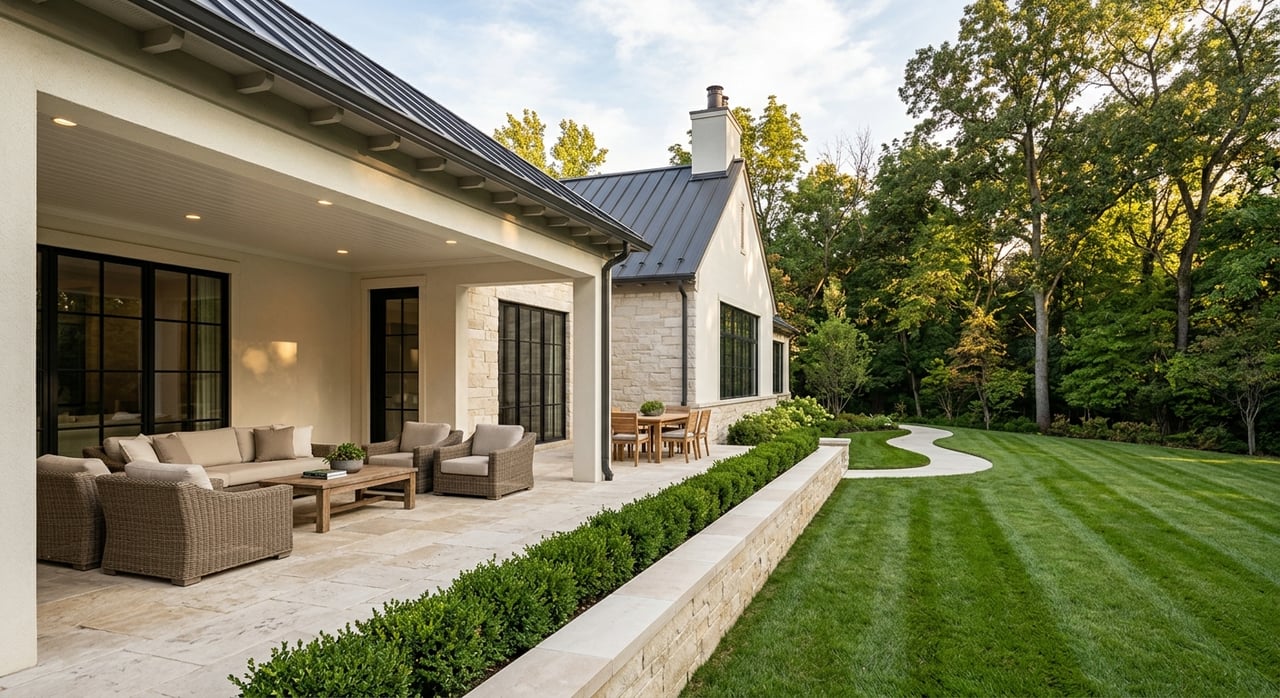
For a golf course property, the rear elevation often carries the strongest part of the story. Buyers want to understand how your patio, pool, lawn, seating areas, and sight lines relate to the course.
That means your marketing should do more than mention a golf lot in the description. It should visually prove the relationship between the home and the course with polished, high-quality imagery.
Visuals that support value
The 2025 NAR staging report says 83% of buyers’ agents believe staging helps buyers visualize a property as their future home. The same report found that photos, videos, and virtual tours rank as highly important to buyers’ agents.
For a Trophy Club golf home, that supports a marketing package built around:
- Professional photography
- Wide rear-elevation images
- Outdoor-living detail shots
- Video that captures flow and perspective
- Aerial imagery showing lot orientation and course exposure
At George & Noonan, this type of presentation aligns with a marketing-first strategy. For higher-value homes, strong visuals are not an extra. They are part of how you justify pricing and create buyer confidence from the first impression.
Highlight outdoor living with purpose
The strongest golf-home marketing usually starts where buyers imagine spending time. A patio facing the fairway, a pool with open views, an outdoor kitchen, or a fire feature can turn a nice lot into a memorable one.
That lifestyle story also fits Trophy Club itself. Trophy Club Country Club is a private, membership-based club with two championship 18-hole courses and amenities that include dining, racquet sports, fitness, swimming, and terraces.
Timing your visuals well
Late spring through summer is often the best window to launch or photograph a golf course home in Trophy Club. That is when landscaping tends to show best and when the rear of the home feels most like an outdoor living extension rather than just a backyard.
This timing also fits the club’s seasonal rhythm, with the pool open from Memorial Day through Labor Day. If your home’s value story includes outdoor entertaining and golf-course ambiance, seasonal timing can strengthen that message.
Be clear about club membership
This point matters more than many sellers realize. Trophy Club Country Club is private, and its public membership information shows multiple golf and lifestyle tiers with different amenity access and timing.
Your listing should never leave buyers guessing about whether club access is included, optional, separate from the home sale, or tied to a membership category. Clear language prevents confusion and helps protect the credibility of your marketing.
Address privacy and exposure honestly
Golf course buyers often ask two competing questions at the same time. They love the view, but they also want to know how exposed the yard feels during active play.
That is why your listing should clearly show edge conditions and rear-yard usability. A premium golf lot is not just about being next to the course. It is also about how comfortably you can enjoy that location day to day.
Details worth documenting
Make sure buyers can understand:
- Fence lines
- Tree coverage
- Setbacks from the course
- Patio or pool visibility from golf play
- Privacy screens
- Drainage features
- Easements that affect use
Research on golf-course housing points to privacy, open views, and maintenance quality as part of the value equation. The more clearly you answer those questions upfront, the easier it is for buyers to see the premium.
Prepare the home before it goes live
In Trophy Club’s current market, homes are selling in roughly 34 to 35 days and often near list price. That makes early presentation even more important because you want the property to hit the market in its best form, not improve after the first round of showings.
Before photos and launch, NAR recommends decluttering, cleaning, and improving curb appeal. It also reports a median professional staging cost of $1,500, which gives useful context for sellers weighing preparation costs against presentation value.
A smart pre-listing checklist
For a golf course home, your prep list should include both cosmetic and property-specific items:
- Deep cleaning and decluttering
- Landscaping touch-ups
- Outdoor furniture styling
- Staging where needed
- Survey or plat
- HOA documents
- Club-related documents if relevant
- Landscape and irrigation records
- Notes on privacy features, drainage, and easements
This kind of preparation helps buyers evaluate the home quickly and confidently. It also keeps the golf setting from being treated as a generic feature instead of a meaningful premium amenity.
Price the course relationship, not the label
A golf course home can command attention, but the market still expects proof. Buyers in Trophy Club are not simply paying for a golf-themed address. They are evaluating the quality of the view, the privacy of the lot, the livability of the outdoor spaces, and how your home compares with other options across town.
That is why pricing should reflect the actual strength of the course relationship. A direct fairway view with a well-designed backyard may justify a different strategy than a home with looser visual connection or greater exposure.
Local lifestyle details can influence buyers
Some Trophy Club buyers also care about how daily life functions in a golf-centered town. One niche example is the town’s golf-cart rules, which state that golf carts are not currently required to register locally for in-town use, inspections are available, and carts must be driven by licensed operators on roads with speed limits of 35 mph or less.
That may sound minor, but lifestyle details often matter in luxury home decisions. For some buyers, this reinforces the appeal of the community. For others, it may prompt practical questions that your listing agent should be ready to answer.
Selling well means telling a precise story
The best Trophy Club golf-home listings do not rely on broad claims. They tell a precise, visual, well-supported story about what makes the property special and why that location matters.
That means showing the view clearly, preparing the home thoroughly, handling membership details carefully, and pricing with discipline. When those pieces come together, your home has a stronger chance to stand out in a market where buyers expect both quality and clarity.
If you are preparing to sell a golf course home in Trophy Club, George & Noonan Real Estate Group can help you position it with a private market valuation, elevated presentation, and a white-glove marketing plan.
FAQs
How is selling a golf course home in Trophy Club different from selling another home?
- A golf course home needs more precise pricing and marketing because buyers will compare the actual view, privacy, lot orientation, and outdoor living experience, not just the address.
Do golf course homes in Trophy Club always sell for more?
- No. Research suggests golf frontage can add value, but the premium varies and is strongest for homes with direct course frontage or clear views.
What should a Trophy Club golf course home listing highlight?
- Your listing should clearly show rear views, outdoor living spaces, lot position, privacy features, and the home’s exact relationship to the course.
Should a Trophy Club seller mention country club membership in the listing?
- Yes, but carefully. Since Trophy Club Country Club is private and offers different membership tiers, the listing should clearly explain whether any access is separate, optional, or not included in the sale.
When is the best time to sell a golf course home in Trophy Club?
- Late spring through summer is often a strong time because landscaping, outdoor living spaces, and golf-oriented visuals usually show at their best.
What documents should a Trophy Club golf home seller gather before listing?
- A strong pre-listing packet may include the survey or plat, HOA documents, relevant club information, landscape and irrigation records, and notes on drainage, easements, or privacy improvements.